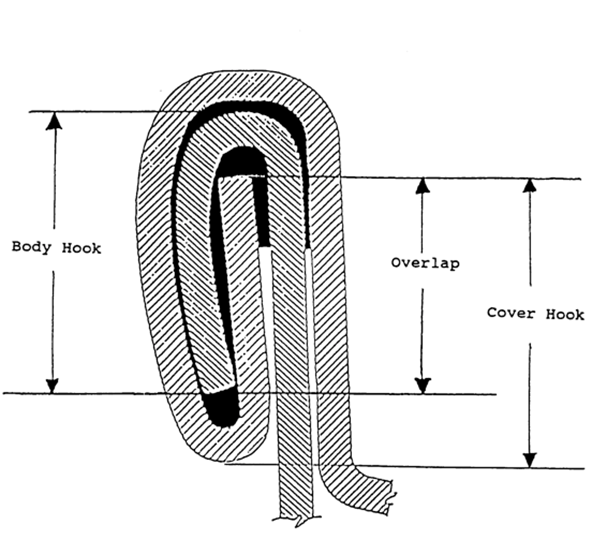
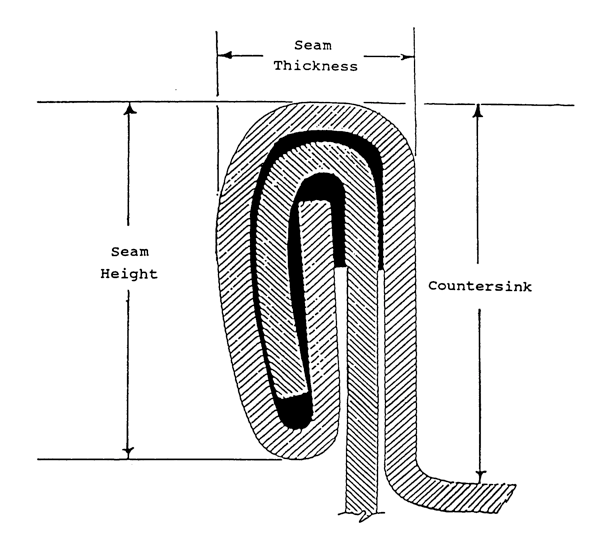

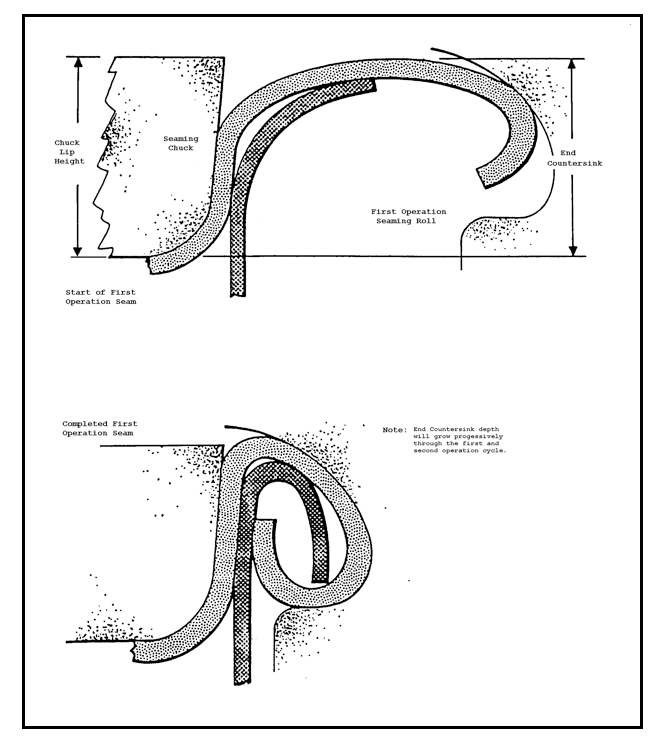
1st Operation - forming the overlap
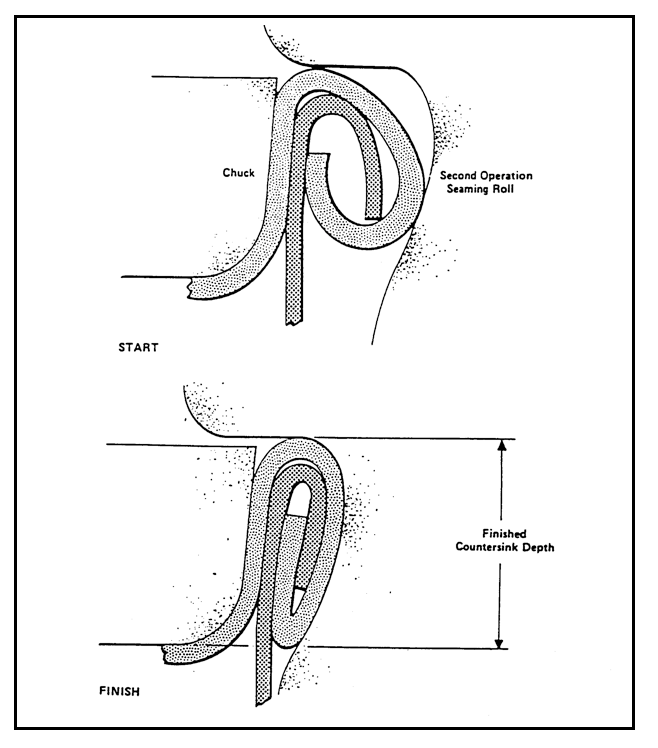
2nd Operation - closing the seam
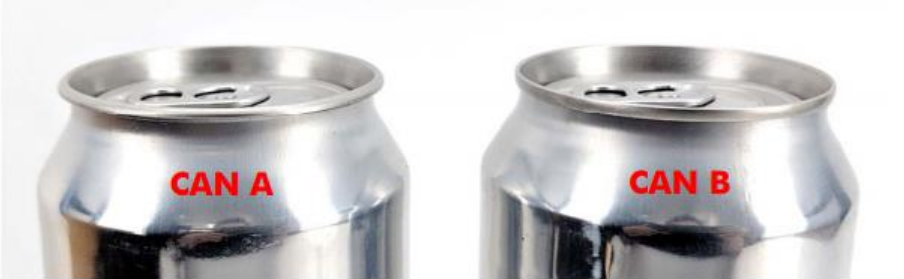
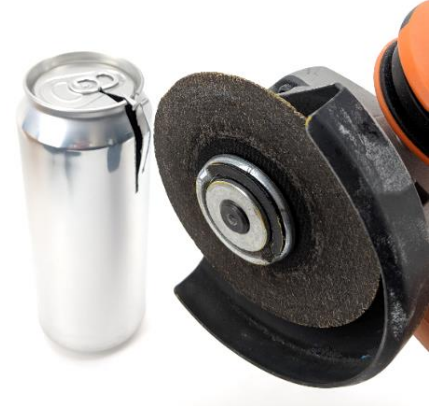 |
{% hint style="warning" %}
Please take appropriate safety precautions when using power tools.
{% endhint %}
{% endstep %}
{% step %}
#### Clean the cut edge
| | |
| --------------------------------------------------------------------------------------------------------------- | ----------------------------------------------------------------------------------------------------------------------------------------------------------------------------------------------------------------- |
| Use a utility knife to scrape the cut clean. Fine sandpaper can also be used. This will help assess the overlap |  |
| {% endstep %} | |
{% step %}
#### Inspect Can A (first operation) for overlap
| | |
| --------------------------------------------------------------------------------------------------------------------------------------------------------------------------------------------------------------------------------------------------------------------------------------------------------------------- | ------------------------------------------------------------------------------------------------------------------------------------------------------------------------------------------------------------------------------------------------------- |
|
|
{% hint style="warning" %}
Please take appropriate safety precautions when using power tools.
{% endhint %}
{% endstep %}
{% step %}
#### Clean the cut edge
| | |
| --------------------------------------------------------------------------------------------------------------- | ----------------------------------------------------------------------------------------------------------------------------------------------------------------------------------------------------------------- |
| Use a utility knife to scrape the cut clean. Fine sandpaper can also be used. This will help assess the overlap |  |
| {% endstep %} | |
{% step %}
#### Inspect Can A (first operation) for overlap
| | |
| --------------------------------------------------------------------------------------------------------------------------------------------------------------------------------------------------------------------------------------------------------------------------------------------------------------------- | ------------------------------------------------------------------------------------------------------------------------------------------------------------------------------------------------------------------------------------------------------- |
| 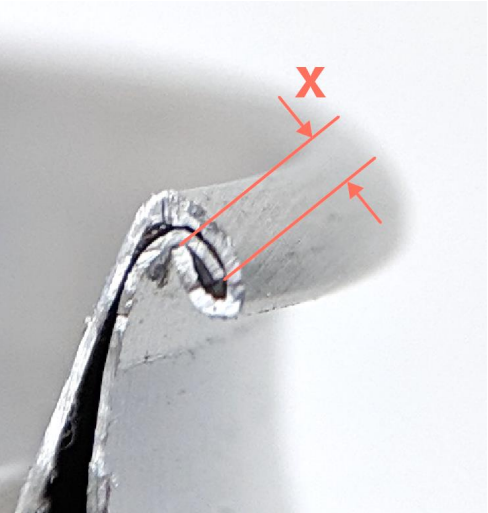 |
| {% endstep %} | |
{% step %}
#### Inspect Can B (after both operations)
| | |
| ----------------------------------------------------------------------------------------------------------------------------------------------------------------------------------------------------------------------------------------------------------------------------------------------------------------------------------------------------------------------------------------------------------------------------------------------------------- | ------------------------------------------------------------------------------------------------------------------------------------------------------------------------------------------------------------------------------------------------------- |
|
|
| {% endstep %} | |
{% step %}
#### Inspect Can B (after both operations)
| | |
| ----------------------------------------------------------------------------------------------------------------------------------------------------------------------------------------------------------------------------------------------------------------------------------------------------------------------------------------------------------------------------------------------------------------------------------------------------------- | ------------------------------------------------------------------------------------------------------------------------------------------------------------------------------------------------------------------------------------------------------- |
| 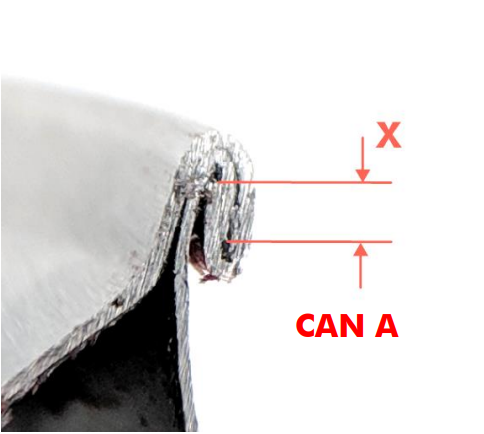 |
| {% endstep %} | |
| {% endstepper %} | |
### 2nd Op seam thickness
| | |
| --------------------------------------------------------------------------------------------------------------------------------------------------------------------------------------------------------------------------------------------------------------------------------------------------------------------------------------------------------------------------------------------------------------------------------------------------------- | ----------------------------------------------------------------------------------------------------------------------------------------------------------------------------------------------------------------- |
|
|
| {% endstep %} | |
| {% endstepper %} | |
### 2nd Op seam thickness
| | |
| --------------------------------------------------------------------------------------------------------------------------------------------------------------------------------------------------------------------------------------------------------------------------------------------------------------------------------------------------------------------------------------------------------------------------------------------------------- | ----------------------------------------------------------------------------------------------------------------------------------------------------------------------------------------------------------------- |
| 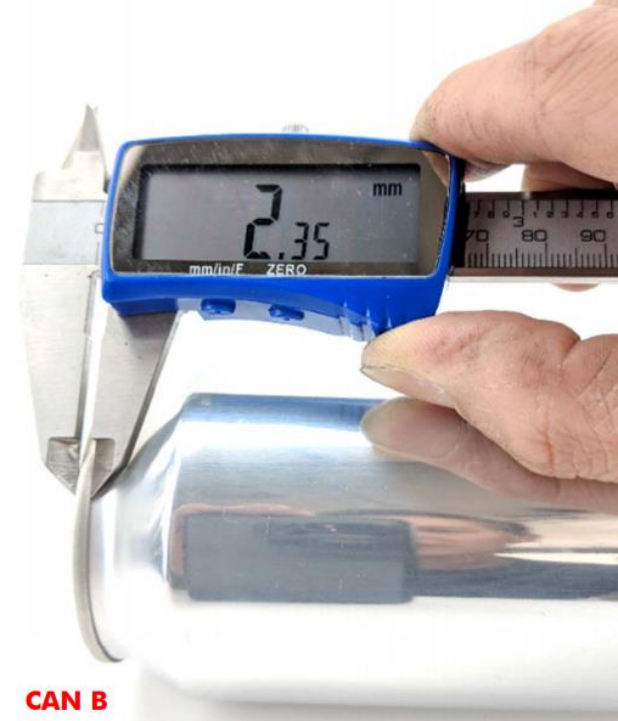 |
Remember: to check calibration of a Cannular to acheive a hermetic double seam, use calipers to measure the following:
1. **Actual overlap (>0.4mm)**
2. **2nd Op seam thickness (1.2-1.3mm)**
3. **2nd Op seam length (2.3-2.4mm)**
**These three measurements are the best way to determine if the Cannular is correctly calibrated.**
|
Remember: to check calibration of a Cannular to acheive a hermetic double seam, use calipers to measure the following:
1. **Actual overlap (>0.4mm)**
2. **2nd Op seam thickness (1.2-1.3mm)**
3. **2nd Op seam length (2.3-2.4mm)**
**These three measurements are the best way to determine if the Cannular is correctly calibrated.**