# Duotight Female Flare Fittings
Duotight fittings are an easy way to make leakproof seals quickly and reliably. The female flare
fittings are a unique fitting that seals without the use of an o‐ring, washer or thread tape.
These flare fittings require a small amount of deformation in the tapered/flared profile so a specific
amount of compression is achieved.
This instruction sheet will enable you to easily determine the correct level of seal compression
without the need to tighten the fitting excessively.
{% stepper %}
{% step %}
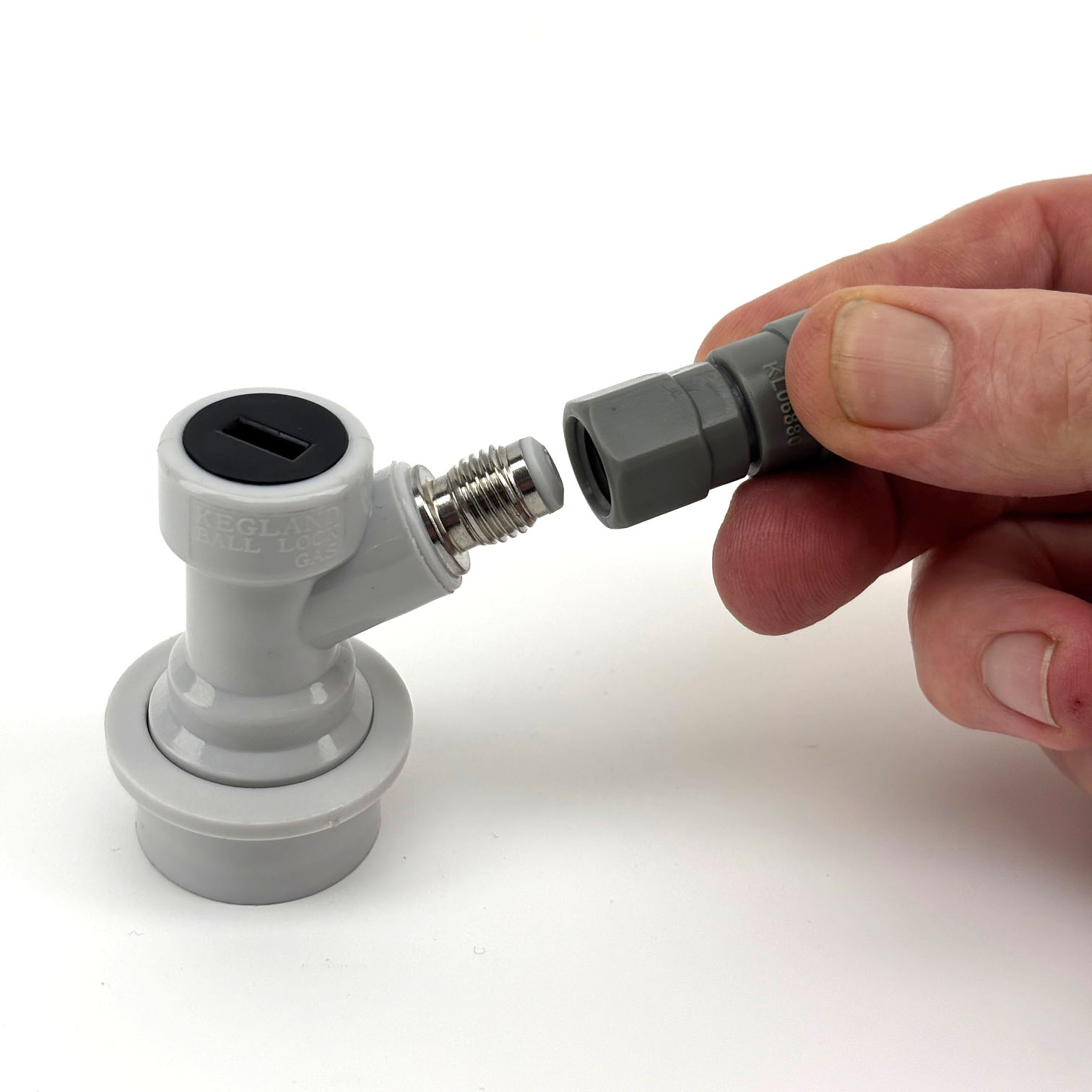
### Hand Tighten The Duotight
By hand, tighten the female flare (FFL) Duotight fitting onto the male flare (MFL) of the ball lock
disconnect or regulator thread. Do this up as tight as you can with your fingers alone.
{% endstep %}
{% step %}
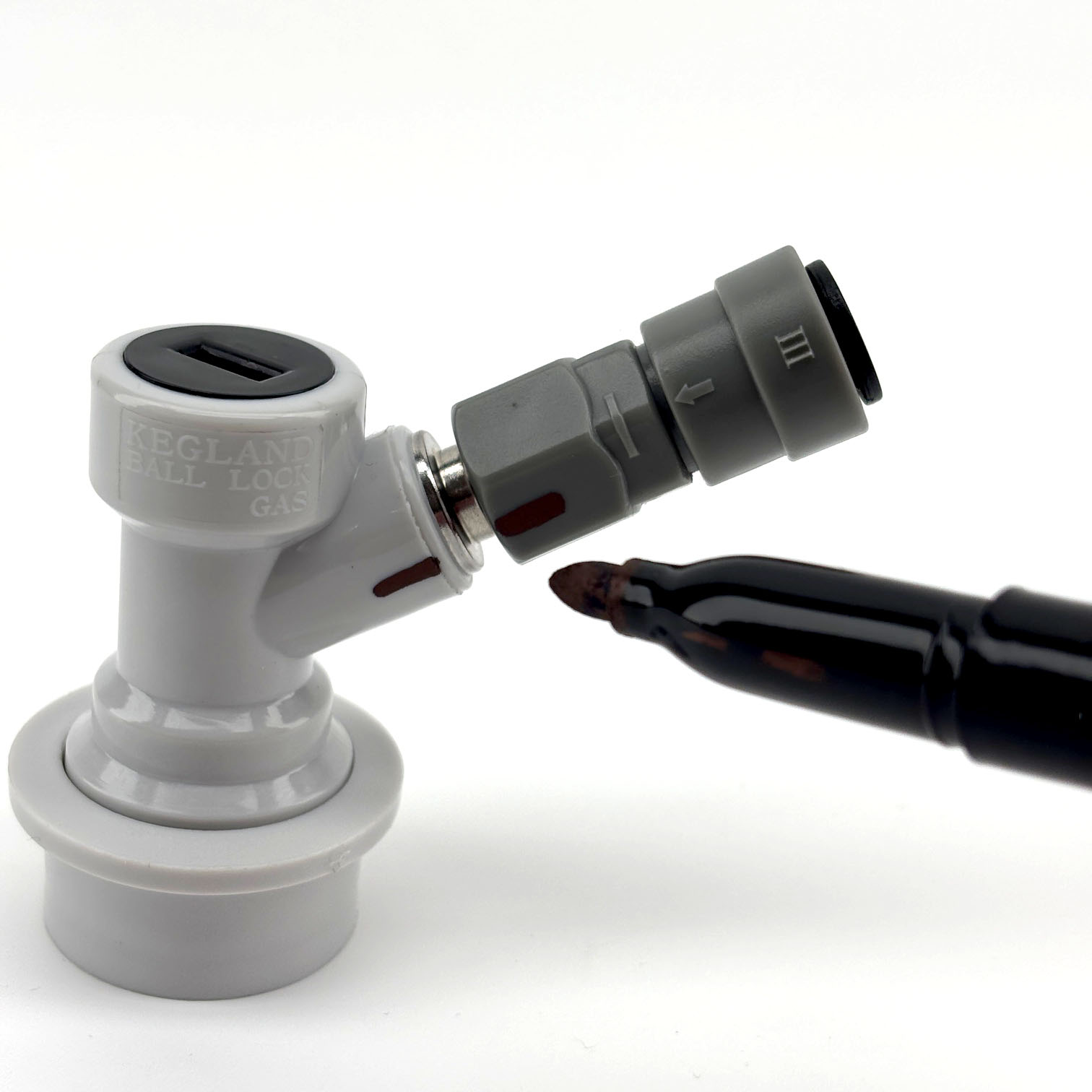
### Mark Both Sides
Use a marker and mark both the FFL and MFL sides of the fitting.
{% endstep %}
{% step %}
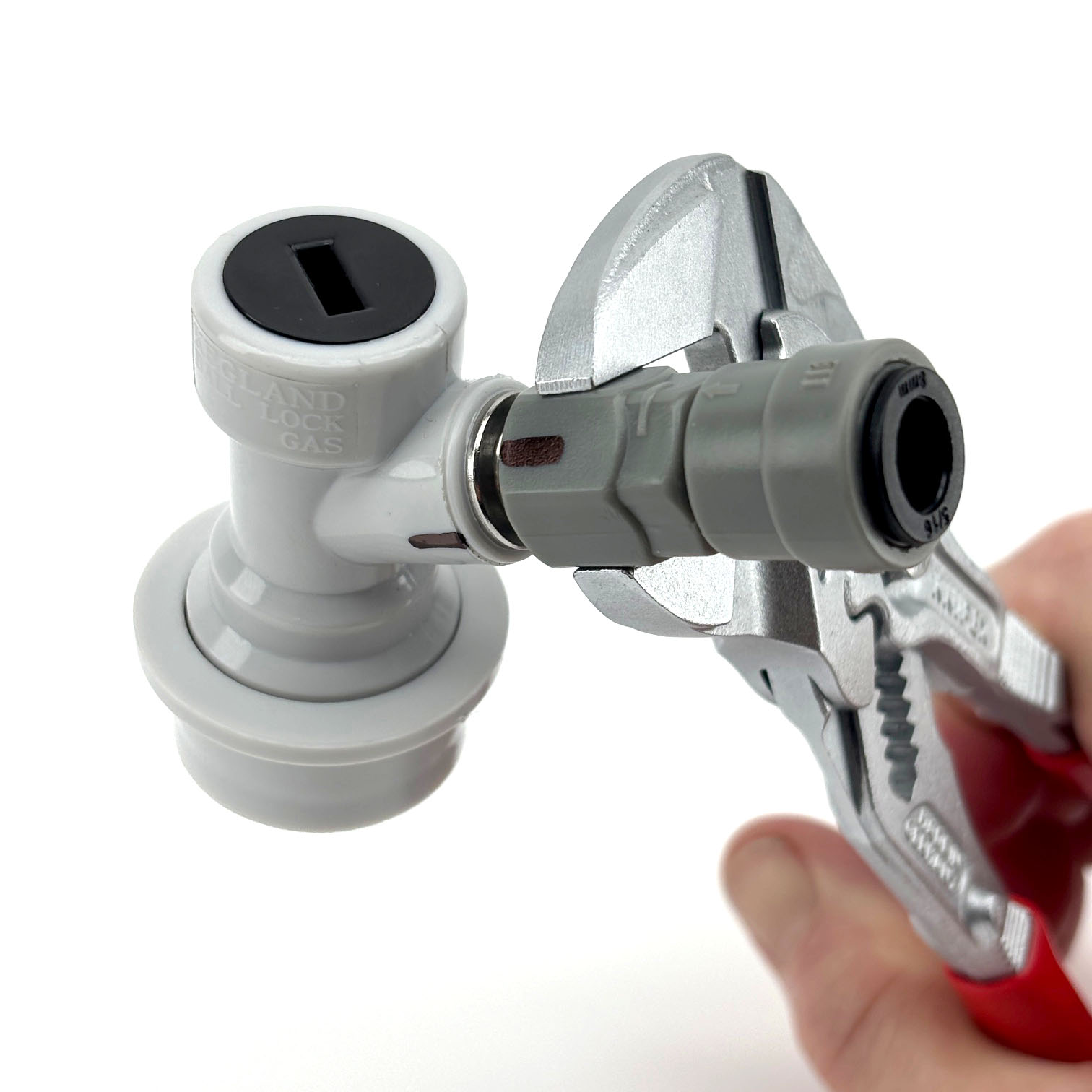
### Tighten With Shifter
Paying attention to the markings in step 2, tighten the duotight fitting with a shifter and rotate the
fitting an additional 180 degrees so the two markings are on opposite sides.
{% endstep %}
{% step %}
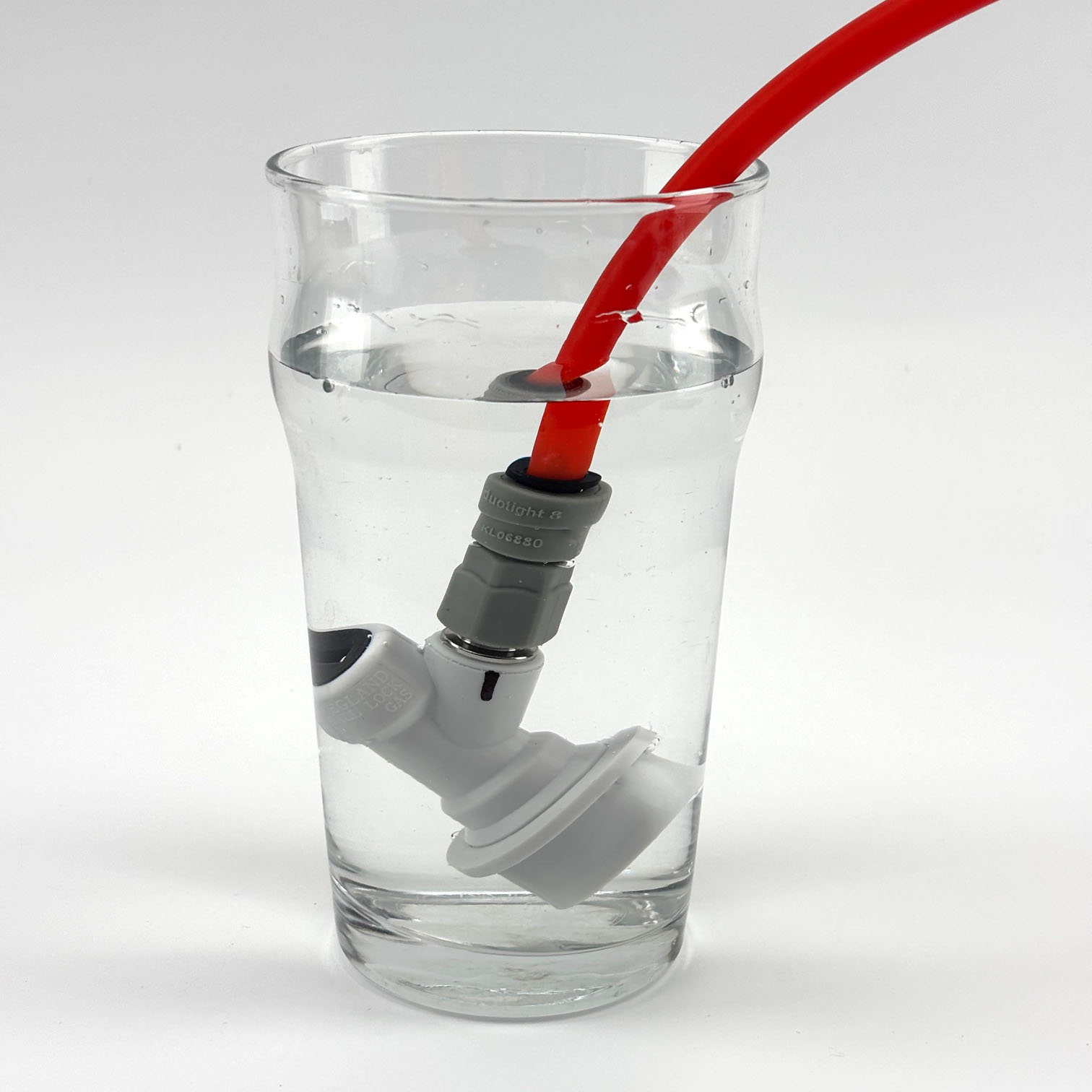
### Test For Leaks
Submerse the whole disconnect in a glass of water while the fitting is at 30psi and check for
leaks/bubbles. If any bubbles are detected, repeat step 3 and rotate the fitting by another 90
°.
%20Female%20x%20FFL%20Female%20Thread%20-%2000.jpg?alt=media&token=df0a04c5-9d2b-4c06-9b2c-794cafa956c1)