Seam Troubleshooting
KL15769 Cannular Compact Semi-Auto Canning Machine | Seaming Troubleshooting
Can Seaming Issues
Most of the time, if there are seaming issues with cans after the seaming operation, the issue is incorrect calibration.
Seaming issues encompass any leaks from the seam of the can or end. Inconsisstent seaming also indicates that the calibration of the rollers to the chuck is not 100% accurate.
Canning is a very precise operation, and care must be taken to ensure that all parts (table, chuck and rollers) are calibrated correctly. Failure to calibrate to sepcification will result in inconsistent seams and leak issues.
Remember: if you are having difficulties getting consistent, hermetic double seams, then the calibration of the Cannular is likely not in spec.
Remember: to check calibration of a Cannular to achieve a hermetic double seam, use calipers to measure the following:
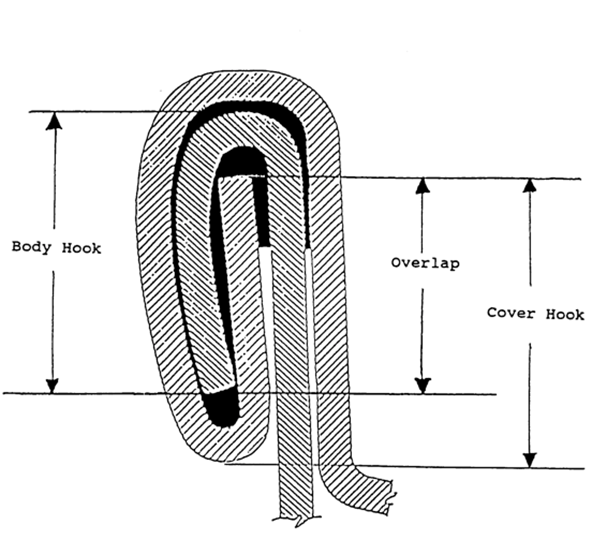
Actual overlap (>0.4mm)
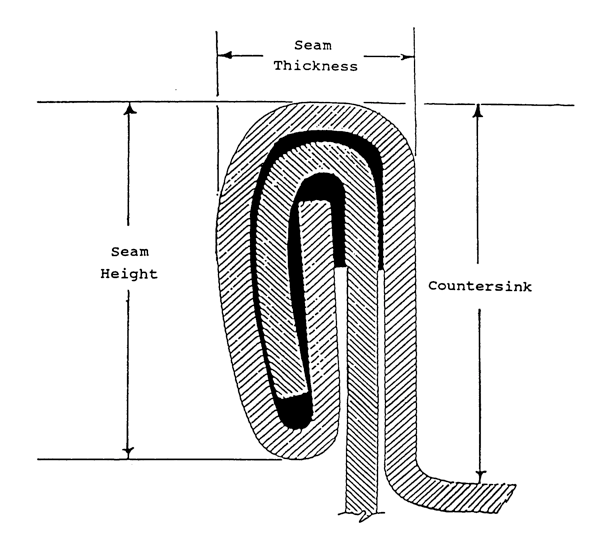
2nd Op seam thickness (1.2-1.3mm)
2nd Op seam length (2.3-2.4mm)
These three measurements are the best way to determine if the Cannular is correctly calibrated.
Some common seaming issues are listed below. it is not possible to cover all possible seaming issues.
It is also helpful to be familiar with the components of the seam before troubleshooting


First, follow this guide to help determine the seaming issue by seaming and cutting two cans.
This will help narrow the seaming issue down.
Seaming issues tend to fall into three broad categories - overlap issues, seam size issues, and other issues.
Overlap Issues (After 1st Operation only)
If the overlap is insufficient as determined after following this guide, try to see where exactly the issue - short or long body hook, short or long cover hook etc as this can help isolate the issue and make correction easier. However, in practice it can be quite difficult to accurately asses the exact cause of overlap issues visually without specialised tools.
Getting an overlap of at least 0.4mm is critical to obtaining a hermetic double seam. Other seam issues are generally less critical and easier to correct once the overlap is correct. The overlap is almost entirely determined by correct 1st Operation clibration.
Short Overlap - cannot determine exact issue (cover hook, body hook, etc)

If the overlap is less than 0.4mm first check table hieght - ensure the can is snug against the chuck with no possibility of buckling. Next, check the 1st Operation specs - this is the most likely reason for a short overlap
Short Cover Hook causing insufficient overlap

1st Operation Roller out of spec - check y-axis Table height out of spec - ensure can is snug against chuck
Long Body Hook causing insufficient overlap

2ns Operation Roller too close in x-axis resulting in over tight seam Table height out of spec - Possibly the can is too snug against the chuck
Short Body Hook causing insufficient overlap

1st Operation Roller out of spec - check y-axis Table height out of spec - ensure can is snug against chuck
Finished Seam Out Of Spec (After Both Operations)
If the finished seam has good overlap but is too long or too short then this will likely casue leaking issues. Provided there is good overlap (>0.4mm) after both first and second operations then the likely problem is the 2nd Operation Roller is out of spec.
In addition, if the overlap is good after the 1st Operation, but too small after the 2nd Operation, this is likely a 2nd Operation calibration issue
To check the specs of the 2nd operation please follow this guide
To adjust the 2nd Operation Roller relative to the chuck refer to Calibration
Finished seam too narrow (>1.3mm)
2nd Operation Roller too close to chuck in x-axis
Adjust 2nd Operation Roller away from the chuck in the x-axis (0.3 mm ± 0.1 mm)
Finished seam too wide (<1.2mm)
2nd Operation Roller too far from chuck in x-axis
Adjust 2nd Operation Roller closer to the chuck in the x-axis (0.3 mm ± 0.1 mm)
Finished seam too tall (>2.4mm)
2nd Operation Roller too close to chuck in y-axis
Adjust 2nd Operation Roller further from the chuck in the y-axis (1.35 mm ± 0.05 mm)
Finished seam too short (<2.3mm)
2nd Operation Roller too far from chuck in x-axis
Adjust 2nd Operation Roller closer to the chuck in the y-axis (1.35 mm ± 0.05 mm)
Overlap too small after 2nd Operation (if overlap >0.4mm after 1st Operation)
2nd Operation Roller too close to chuck in y-axis
Adjust 2nd Operation Roller further from the chuck in the y-axis (1.35 mm ± 0.05 mm)
Horizontal crease in circumference of seam
2nd Operation Roller too close to chuck in x-axis
Adjust 2nd Operation Roller away from the chuck in the x-axis (0.3 mm ± 0.1 mm)
Horizontal crease in circumference of seam
2nd Operation Roller too far from chuck in x-axis
Adjust 2nd Operation Roller closer to the chuck in the y-axis (1.35 mm ± 0.05 mm)
Other Seam Issues (After Both Operations)
Always ensure that there is sufficient overlap (>0.4mm) after the 1st Operation before proceeding with further troubleshhoting of seam issues. Insufficient overlap is the most common cause of seaming issues. A hermetic double seam cannot be achieved without suffiecient overlap. Once there is good overlap after the 1st operation, refer below for further troubleshooting diagnostics.
Irregular, V shaped ripples in the finished seam

1: Table height out of spec - ensure can is snug against chuck 2: Rollers or chuck may be damaged - inspect and replace if required 3: 1st Operation Roller out of spec - check overlap after 1st Op only
Body flange protrudes past seam in localised area of seam

Can or end may have been damaged before seaming operation - test with a new can and end One or both Operation Rollers out of spec - check measurements aginst this guide Table may not be concentric against chuck - inspect visually and adjust table
False Seam - no overlap at all

This will normally be detected when testing after 1st Operation only. If the body hook is under the cover hook with no overlap it is a false seam. 1: Table height out of spec - ensure can is snug against chuck 2: 1st operation roller y-axis too high or x-axis too far from chuck, or both
Overlap is shorter after 2nd Operation

If the overlap is good (>0.4mm) after the 1st Operation, but becomes shorter after the 2nd Operation, this is a Sprung Seam. 1. The 2nd Operation is too tight - check x-axis against this guide 2. The 2nd Operation Roller is too low- check y-axis against this guide
Dimples in bottom edge of seam

Rollers or chuck may be damaged - inspect and replace if required Can or end may have been damaged before seaming operation - test with a new can and end Table height out of spec - Possibly the can is too snug against the chuck
Sharp Seam

1st Operation Roller too close to chuck in x-axis 2nd Operation Roller too close to chuck in x-axis
Overlap in spec (>0.4mm) but inconsistent or no hermetic seam
2nd Operation Roller out of spec
Test seam width and height and adjust 2nd Operation accordingly
Overlap in spec but inconsistent or no pressure seam
Table Height not correct
Table height out of spec - ensure can is snug against chuck
Some cans leak after a run
Table Height not correct
Table height out of spec - ensure can is snug against chuck
Cannular in spec (according to this guide) but seaming is inconsistent
Rollers or chuck damaged
Inspect rollers and chuck for damage. Replace if damaged
Last updated
